


Galicia: wine from the Atlantic to the Sil
You probably know Albariño. Treixadura, Caiño, Merenzao and Brancellao, maybe not. All five grow in Galicia, and they taste so different that we would rather read the region by origin and grape than by colour.
Galicia has five DOs: Rías Baixas, Ribeiro, Ribeira Sacra, Valdeorras and Monterrei. We carry wine from three of them, plus one grower who works in the middle of the Ribeira Sacra and bottles outside the DO on purpose. From Valdeorras and Monterrei we have nothing right now.
In 2024 James Suckling named Guímaro's Finca Meixemán the best wine in Spain. We have worked with Pedro for years. We don't choose wines by scores, but we enjoyed that one.
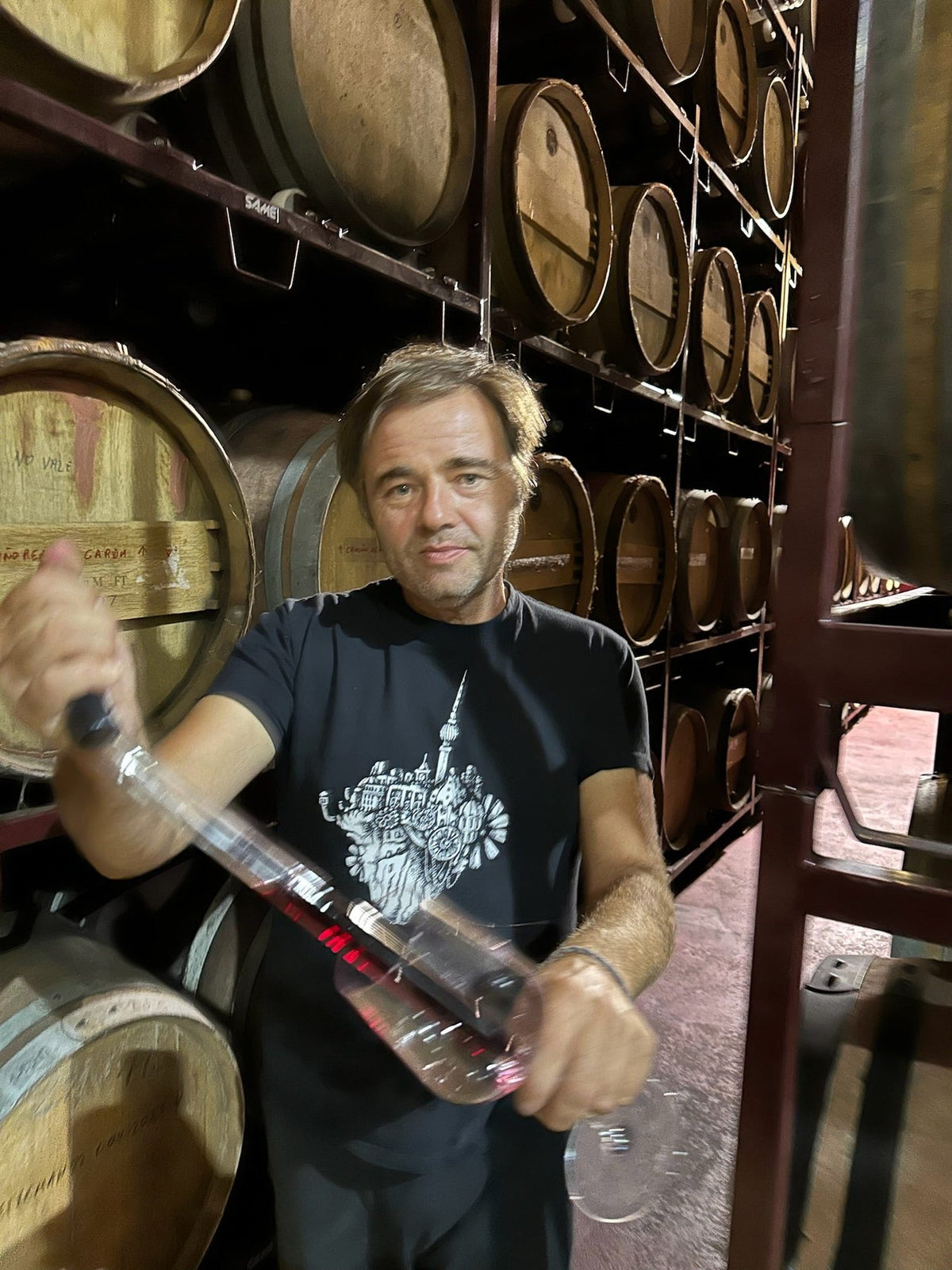
Barrel tasting with Pedro of Adegas Guímaro.
Rías Baixas: Albariño with a sea view
The Rías Baixas sit on the Atlantic, and you can taste it. In the Val do Salnés, the coolest and most coastal part of the DO, brothers Robustiano and Baldomero Fariña run Attis. Their vines are trained on pergolas, many of them more than fifty years old. Lías Finas is the way in: apricot, pear, a salty mineral edge. How far the Fariñas will go shows in Attis Mar. After the cellar, it spends six months in crates twelve metres down in the Atlantic, among the mussel beds of the rías.
What we love most at Attis, though, are the reds. Rías Baixas means white wine, yet the Fariñas make three single-variety reds from Pedral, Espadeiro and Sousón, each between 1,080 and 1,594 bottles. Under the Sitta label they bottle what doesn't fit the DO rules: two orange wines, a rosé and two sweet wines. And since 2019 they also make wine in Bierzo with Sangarida, just across the Galician border in León.
In the Condado do Tea subzone, Toni Alonso of Veigamoura makes nothing but Albariño. His Veigamoura smells of lime and grapefruit, with granite underneath. Quinquenio only happens in years when everything lines up, and it spends five winters in the cellar before he sells it. If you want to know how Albariño ages, start here.
Ribeiro: the valley of Treixadura
Ribeiro became a DO in 1932, which makes it one of the oldest in Spain. Coto de Gomariz lies in the Avia valley, around 30 hectares of slate, granite and sand. In the 1970s Ricardo Carreiro Ameijeiras began replanting the old Gomariz vineyards with Treixadura, Godello, Albariño and Sousón. Today Inma Pazos runs the cellar: hand harvest, wild yeasts, some clay amphorae. The house motto is «Dende o Século X», since the tenth century.
Treixadura is the grape to get to know here. In Finca o Figueiral it makes up 70 per cent, with Godello, Albariño, Loureira, Lado and other local varieties. The site has been on record since the 13th century and was replanted in 1978. There are 1,450 bottles. If you'd rather start with a single variety, take Gomariz X Godello: steel tank, citrus, lime zest.
Ribeiro reds are quieter than those from the Ribeira Sacra, and that is exactly what we like about them. Abadía de Gomariz is half Sousón. The Brancellao spent a year in a clay amphora, has 11.5 per cent alcohol and smells of violets, sour cherry and wild strawberry. There are 290 bottles.
White, from the sea to the Sil
All wines from Galicia-
Veigamoura 2024, Veigamoura
Albariño from pergola vines. Lime, grapefruit, granite.
CHF 29.00
-
Lías Finas 2024, Attis
Vines over 50 years old in the Val do Salnés.
CHF 21.00
-
Gomariz X Godello 2023, Coto de Gomariz
Godello from Ribeiro, steel tank only.
CHF 25.00
-
Colleita Seleccionada Finca o Figueiral 2022, Coto de Gomariz
70 per cent Treixadura, 1,450 bottles.
CHF 39.00
-
Brandán 2024, Algueira
Godello from slate, with a fine bitter edge.
CHF 19.00
-
Ourive Dona Branca 2023, Ronsel do Sil
A grape the whole DO harvests only 5,800 kilos of.
CHF 36.00
-
Mar 2023, Attis
Six months twelve metres down in the Atlantic.
CHF 89.00


Ribeira Sacra: terraces above the Sil
We have written two stories of their own about the Ribeira Sacra: one on the heroic viticulture on Roman terraces with slopes of up to 85 per cent, and one on Mencía, which gives some of Spain's most precise reds there. So here, only what those stories left out: the whites and the rare reds.
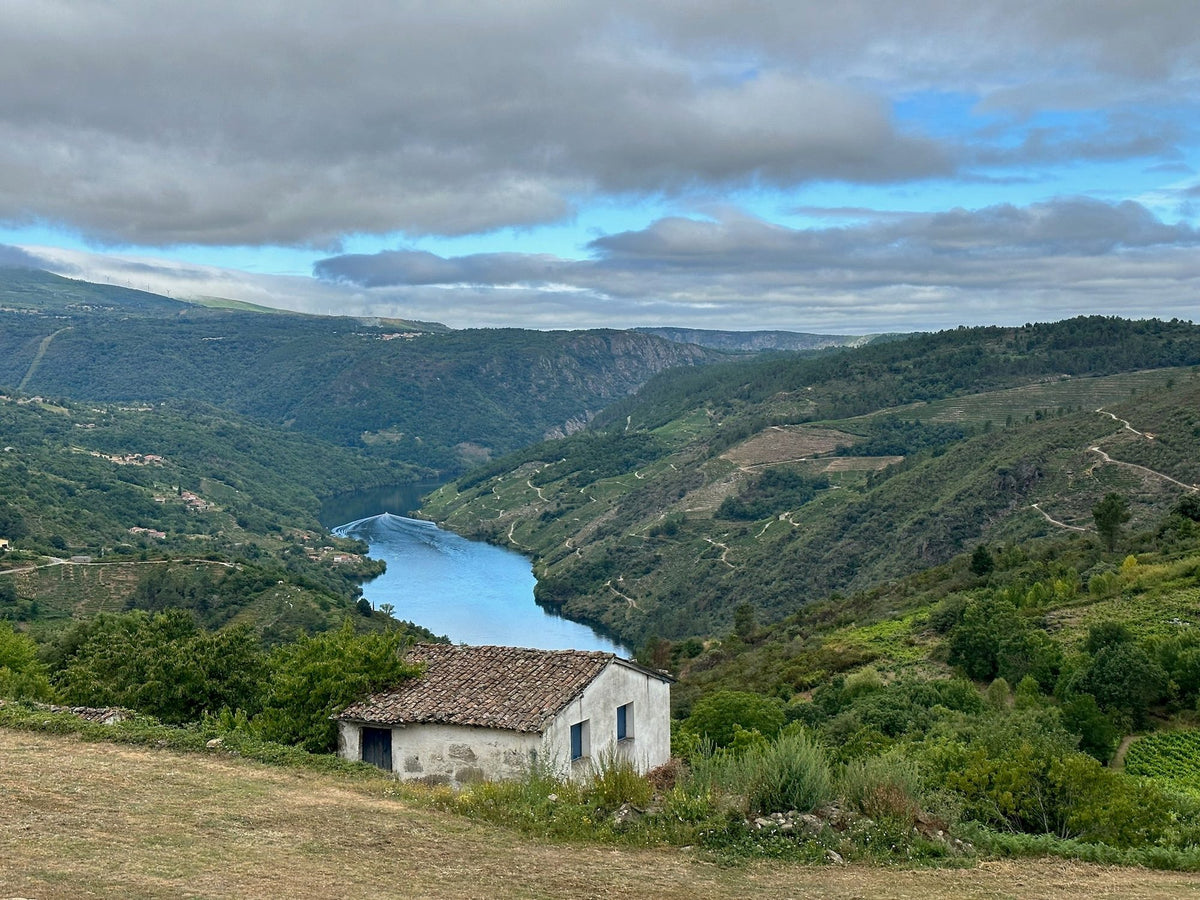
View from Cristosende over the Ribeira Sacra and the Sil.
At Ronsel do Sil, María José Yravedra makes her whites from single varieties. Ourive Dona Branca comes from vines over 85 years old on slate. The whole DO harvests only around 5,800 kilos of this grape a year. Ourive Treixadura shows the same grape as in Ribeiro, only at 550 metres and in barrel: creamier, with grapefruit and apricot. There are 640 bottles.
At Algueira, look at the Merenzao. For Risco the whole bunches are trodden by foot in 600-litre wooden vats, the traditional way. The wine is a pale cherry red, has 12.5 per cent alcohol and smells of raspberry, cranberry and cedar. The estate's Pizarra, by contrast, is pure Mencía from slate, aged 12 to 18 months in wood.
And then there is Carlos Carballo in A Pobra do Brollón. He bottles outside the DO rules on purpose and works only with native varieties. His Xcelso Patao is pure Merenzao, named after his father Patao, who still helps him in the vineyard every day. It feels delicate when you open it and shows completely different aromas after a few hours of air. Give it that time.
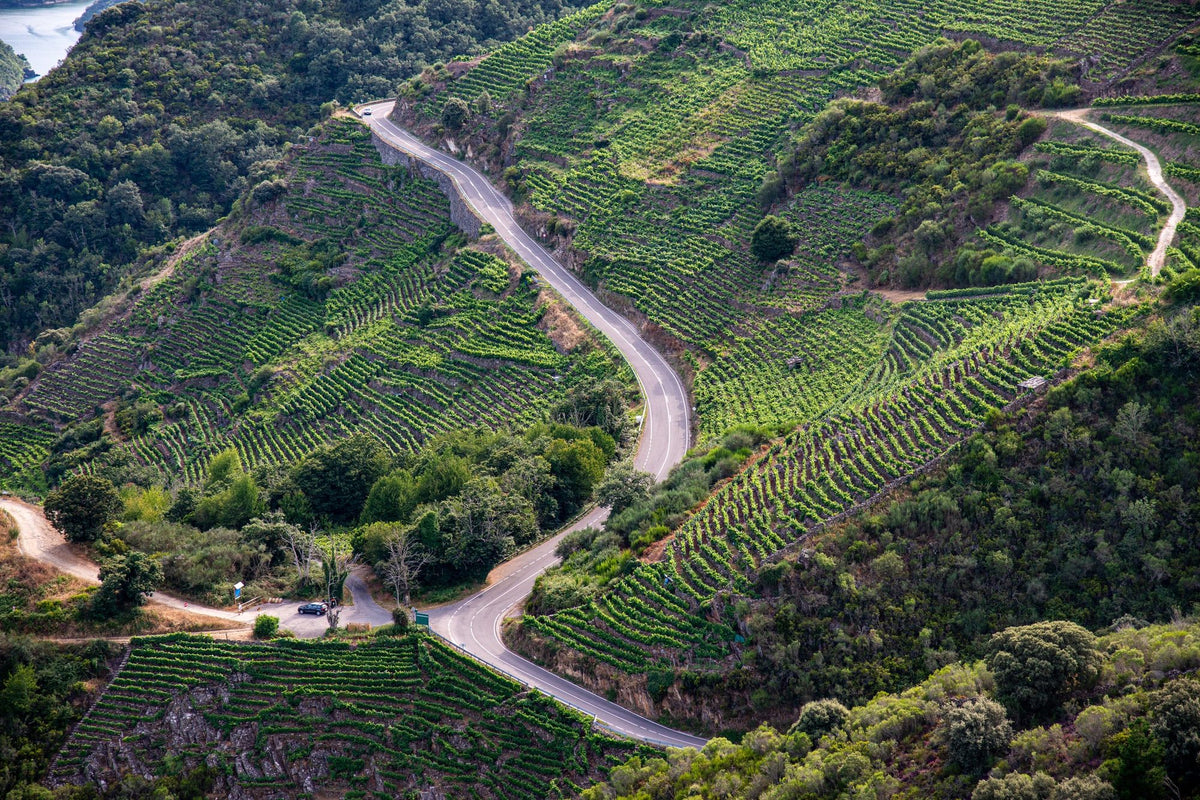
The steep vineyards of Amandi, a subzone of the Ribeira Sacra.
Seven grapes to start with
If you want to explore Galicia grape by grape, here is the short map. The notes come from wines on our shelves.
- Mencía: sour cherry, violets, wet stone. The red grape of the Ribeira Sacra.
- Godello: green apple, pear and a fine bitter note on the finish.
- Treixadura: grapefruit and apricot, creamy in barrel.
- Sousón: blackberry, raspberry, ink.
- Caiño: smoke, liquorice and lively acidity.
- Merenzao: pale colour, raspberry, spice.
- Brancellao: sour cherry, white pepper, silky tannins.
Red, beyond Mencía
All of Galicia-
Sousón 2018, Attis
Sousón from the Atlantic. Blackberry and ink.
CHF 35.00
-
Espadeiro 2019, Attis
1,594 bottles. Liquorice and lilies.
CHF 35.00
-
Abadia de Gomariz 2022, Coto de Gomariz
Half Sousón, plus Brancellao, Ferrol, Mencía.
CHF 24.00
-
Al Pie del Cañón 2022, Ronsel do Sil
Pure Caiño. Smoke and liquorice.
CHF 39.00
-
Pórtico da Gloria 2023, Ronsel do Sil
Brancellao. Sour cherry, white pepper.
CHF 39.00
-
Risco 2019, Algueira
Merenzao, trodden by foot.
CHF 35.00
-
Alpendre 2023, Ronsel do Sil
Merenzao from granite. Sloe and rose.
CHF 42.00
-
Xcelso Patao 2021, Carlos Carballo
Merenzao outside the DO. Needs hours of air.
CHF 99.00


Where to start
Our tip: start with two whites. Veigamoura is Albariño from pergola vines in the Condado do Tea, good at 10 to 12 degrees with shellfish and grilled fish. Ronsel do Sil's Ourive Treixadura comes from vines over 85 years old above the Sil, ferments in French oak and is noticeably creamier. For a red after that, pick a Merenzao: Alpendre at 12 to 14 degrees with poultry or mushroom risotto, or Algueira's Risco.
For more Spanish wine beyond Rioja, see our page Spanish wines.
