
Free shipping from 12 bottles · Delivery throughout Switzerland

Free shipping from 12 bottles · Delivery throughout Switzerland

Rías Baixas · Spain
Brothers Robustiano and Baldomero Fariña work in the Val do Salnés, the coolest part of Rías Baixas and the closest to the coast. You taste the Atlantic in their Albariño as a distinct saltiness.
4 Red wines, 6 White wines, 1 Rosé, 2 Sweet wines, 2 Orange wines. From CHF 21.00.
Albariño
CHF 21.00
Caiño, Pedral, Espadeiro
CHF 25.00
Albariño, Caiño Blanco, Godello
CHF 39.00
Albariño
Sale price
CHF 33.00
Regular price
CHF 38.00
Albariño
CHF 89.00
Albariño
CHF 35.00
Albariño
CHF 39.00
Albariño
CHF 42.00
Espadeiro
CHF 35.00
Albariño
CHF 55.00
Albariño
CHF 29.00
Sousón
CHF 35.00
Espadeiro
CHF 35.00
Pedral
CHF 35.00
Albariño
Sold Out
No wine matches these filters.
Tasting boxes
Origin
The Val do Salnés is the coolest part of the Rías Baixas in Galicia and the one closest to the coast. Attis grows its vines here on pergolas, as is usual in the area, at around 800 vines per hectare.
Some of the vineyards look straight out to sea. The grapes for the Mar come from vines over 50 years old facing west onto the Atlantic.
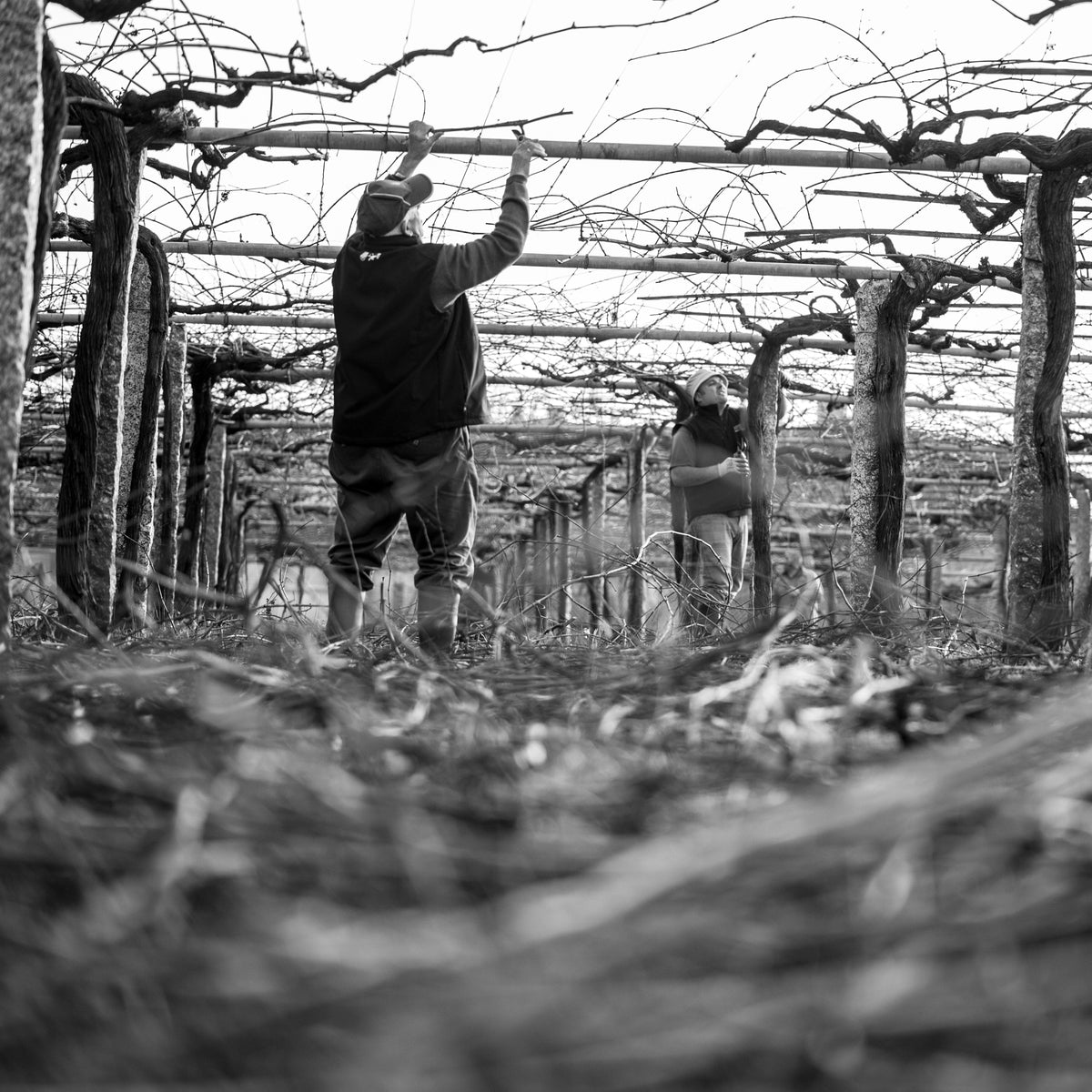

The people
The brothers Robustiano and Baldomero Fariña run Attis with a small team. They took the name from the Greek myth of Attis, who was meant to serve the cult of the goddess Cybele.
In 2019 the two of them founded a second winery in the Bierzo with Robustiano's daughter Lía, and named it Sangarida, after the nymph in the same story.
Philosophy
Whatever does not fit the rules of the Rías Baixas, the Fariñas bottle under the name Sitta.
That includes two orange wines from Albariño: the Maceración spends 15 days on its skins in steel, the Doliola ten months in 380-litre clay amphorae. The Sitta Rosado is made from Caiño, Pedral and Espadeiro, old red varieties of Galicia.
Albariño in four steps
The Lías Finas spends six months on the fine lees, the Nana twelve months in barrel, the Embaixador 24 months in granite and steel. The Mar then spends another six months twelve metres down in the Atlantic. To us, Attis is one of the best Albariño producers in the Rías Baixas.
Albariño
CHF 21.00
Albariño
Sale price
CHF 33.00
Regular price
CHF 38.00
Albariño
CHF 42.00
Albariño
CHF 89.00
Terroir
Sandy loam from weathered granite, close to the sea, between sea level and 100 metres.
Mainly Albariño. Alongside it the red varieties Caiño, Espadeiro, Pedral and Sousón, and in the Coribante also Caiño Blanco and Godello.
Atlantic, mild and humid, with wind off the sea. The grapes ripen slowly and keep plenty of acidity.
In the cellar
With Albariño, Attis works with time on the fine lees and with the vessel. The Embaixador, from half a hectare of 60-year-old vines, ages for 24 months, half of it in a granite vat.
The single-variety reds ferment in open 500-litre barrels and age twelve months in French oak. For the Dulce Nana, the Albariño grapes dry for two months on a bed of heather. And after ageing, the bottles of the Mar spend six months in crates twelve metres down in the Atlantic, by the mussel beds of the ría.
You probably know Albariño from the Rías Baixas. Fewer people know the reds from Attis: Pedral, Espadeiro and Sousón, each a single variety, made in quantities of just over 1,000 to 1,600 bottles.
Our pick is the Espadeiro, the most powerful of the three, with liquorice and lilies. If you prefer something finer, take the Pedral.
Photos


An Albariño from vines over 50 years old facing west towards the sea. After fermentation it spends six months on the fine lees in steel tanks and large oak casks. Then the bottles spend six months in crates twelve metres down in the Atlantic, by the artificial mussel beds of the rías. In the glass it is salty and juicy, with very fresh acidity. It costs CHF 89.
Attis is in the Val do Salnés, the coolest part of the D.O. Rías Baixas in Galicia and the one closest to the coast. The bodega belongs to the brothers Robustiano and Baldomero Fariña, who work with a small team. In 2019 they started a second winery in Bierzo with Robustiano’s daughter Lía, called Sangarida. Both names come from the same Greek myth.
Mainly Albariño, the leading variety of the Rías Baixas. Then there are old Galician reds: Attis makes Pedral, Espadeiro and Sousón as single-variety wines, and Caiño goes into the Sitta Rosado with Pedral and Espadeiro. In the Coribante the Albariño is blended with Caiño Blanco and Godello. The vines grow on pergolas with 800 vines per hectare, on sandy loam over weathered granite.
All three are pure Albariño from the Val do Salnés. The Lías Finas 2024 spends six months on the fine lees, CHF 21. The Nana 2023 comes from the oldest family vineyard and spends twelve months on the lees in barrel, currently CHF 33. The Embaixador comes from half a hectare of 60-year-old vines and ages 24 months, half of it in a granite vessel, CHF 42.
Sitta is the name Attis uses for wines made outside the rules of the D.O. They include two orange wines from Albariño: the Maceración, 15 days on the skins in steel, and the Doliola, ten months on the skins in 380-litre clay amphorae. Add to that a Rosado from Caiño, Pedral and Espadeiro and two sweet Albariños in 0.5-litre bottles.
In two ways, both from Albariño and both in 0.5-litre bottles. For the Dulce Nana the grapes dry for two months on a layer of heather, sheltered from rain, before the juice ferments in French oak. For the Pereiras, from a 0.4-hectare plot, fermentation is stopped at 8 to 9 percent alcohol, which keeps the natural sweetness. The Dulce Nana costs CHF 55, the Pereiras CHF 35.
Three single-variety reds from old Galician grapes: Pedral 2019, Espadeiro 2018 and 2019, and Sousón 2018, each CHF 35. They ferment in open 500-litre barrels and age twelve months in French oak. Pedral is fine and velvety, Espadeiro powerful with liquorice and lilies, Sousón dark, with blackberry. Each wine runs to only 1,007 to 1,594 bottles.
Discover more

I am 18 or older
Your cart is currently empty.


