
Free shipping from 12 bottles · Delivery throughout Switzerland

Free shipping from 12 bottles · Delivery throughout Switzerland

Ribeira Sacra · Spain
María José Yravedra is one of Spain's first women winemakers. With her husband Felipe she brought the old bodega on the Sil back to life in 2010, and since then the wine there has moved by gravity alone.
6 Red wines, 7 White wines, 1 Rosé. From CHF 19.00.
Treixadura
CHF 35.00
Godello
CHF 36.00
Mencía, Garnacha Tintorera, Brancellao, Caiño
CHF 25.00
Godello, Treixadura, Doña Blanca / Dona Branca
CHF 25.00
Brancellao
CHF 39.00
Doña Blanca / Dona Branca
CHF 36.00
Mencía
CHF 43.00
Caiño
CHF 39.00
Mencía, Grenache, Mouratón
CHF 19.00
Merenzao
CHF 42.00
Treixadura
CHF 35.00
Godello
CHF 36.00
Godello, Treixadura, Doña Blanca / Dona Branca
CHF 25.00
Brancellao
CHF 39.00
No wine matches these filters.
Tasting boxes
Origin
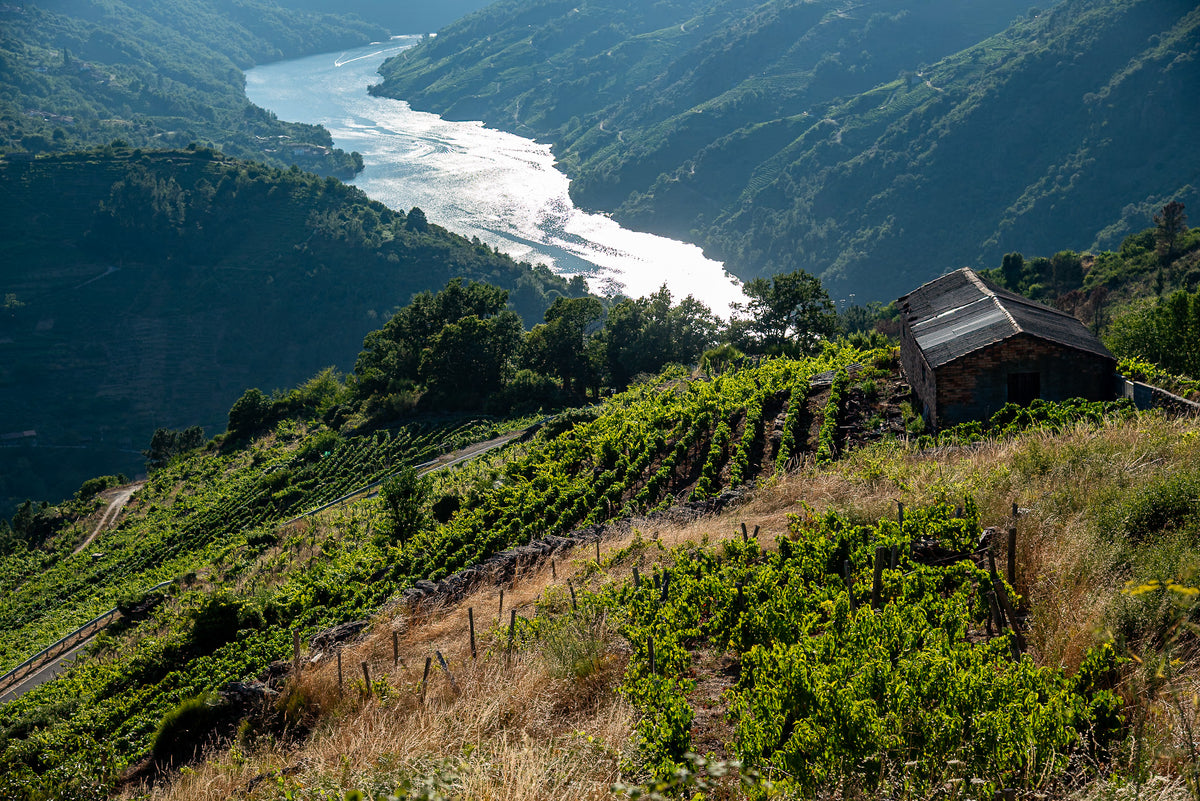
The winery stands near Sacardebois in the municipality of Parada de Sil, right at the bottom of the steep slopes, just above the river. Across the water are the vineyards of Amandi; the monastery of Santa Cristina and the Parador of Santo Estevo are close by.
The vines belong to the D.O. Ribeira Sacra, in the subzones Ribas do Sil and Val do Bibei. No machine can work these terraces, and every grape is picked by hand.

The people
María José Yravedra is an oenologist and architect, and one of the first women winemakers in Spain. In 2010 she and her husband, the architect Felipe Pérez-Somarriba, rebuilt an abandoned old press house on the Sil. Today their two daughters work with them.
Ronsel is the wake a boat leaves behind it. María José dedicated the Muller Cepa to the women who work the vineyards of the Ribeira Sacra.
Philosophy
Sheep graze in the vineyards of Ronsel do Sil.
Compost is made with gorse, and the soil is worked by hand, following biodynamic principles. Almost all the vines are old Ribeira Sacra varieties, and María José bottles three of them on their own: Brancellao in Pórtico da Gloria, Merenzao in Alpendre, Caiño in Al Pie del Cañón.
The reds from the Sil
Pórtico da Gloria is pure Brancellao, Alpendre pure Merenzao, Al Pie del Cañón pure Caiño. The Muller Cepa is mostly Mencía and grows at 650 metres in the Bibei valley. None of them runs to more than 1,400 bottles.
Brancellao
CHF 39.00
Merenzao
CHF 42.00
Caiño
CHF 39.00
Mencía
CHF 43.00
Terroir
Slate and granite on steep terraces above the Sil. The vines for the Muller Cepa grow in the Bibei valley at 650 metres, on slopes of more than 50 percent.
Mencía, Brancellao, Merenzao and Caiño for the reds, Godello, Treixadura and Dona Branca for the whites. Garnacha Tintorera goes into the Rosado.
Atlantic in character, with mild winters and warm summers, and a wide swing in temperature between day and night.
In the cellar
Felipe designed the cellar so that the wine moves from one level to the next without pumps. All the wines ferment spontaneously with natural yeasts.
The whites are pressed gently with their stems, ferment at about 17 to 19 °C and age on their fine lees in steel or barrel, without clarification or filtration. The reds are destemmed, and María José leaves out the press wine. Ageing takes place in old wooden casks, concrete and steel, with little sulphur. The Muller Cepa ferments in a 2,500-litre French oak cask.
If you know Mencía and want to find out what else the Ribeira Sacra can do, start with Alpendre, pure Merenzao. Drink it cool, at 12 to 14 degrees, with poultry or mushroom risotto.
Among the whites, we would reach for the Ourive Dona Branca. Ourive means goldsmith; the three wines in this line come from bush vines over 85 years old, each made from a single variety.
Photos


Ronsel is the wake a boat leaves behind. The bodega sits right at the bottom of the steep slopes of the Sil, near Sacardebois, looking across to the vineyards of Amandi. The vines belong to the D.O. Ribeira Sacra.
María José Yravedra, one of Spain’s first women winemakers. She brought the old bodega back to life in 2010 with her husband Felipe Somarriba. She is an oenologist, he is an architect, and today their two daughters help too.
All picking on the ten hectares of terraces is done by hand, since no machine can reach these slopes. Sheep help in the vineyard, and the compost is made with gorse. The cellar is built so that the wine moves by gravity alone, with no pumps. Every wine ferments spontaneously with natural yeasts, the press wine is not used, and the whites are bottled unfined and unfiltered.
Almost only old varieties of the Ribeira Sacra. For the reds that means Mencía, Brancellao, Merenzao and Caiño, with Garnacha Tintorera added in the rosé. For the whites, Godello, Treixadura and Dona Branca. Many wines are single-variety: Pórtico da Gloria is Brancellao, Alpendre Merenzao, Al Pie del Cañón Caiño, and each of the three Ourive wines is Godello, Treixadura or Dona Branca.
Ourive is Galician for goldsmith. The three whites come from bush vines over 85 years old, each from a single variety: Godello, Treixadura and Dona Branca. They ferment spontaneously in French oak barrels and spend six to eight months on the fine lees. Each wine runs to only 640 to 1,450 bottles. The Treixadura costs CHF 35, the Godello and the Dona Branca CHF 36 each.
A tribute to women in winegrowing and their hard work in the vineyard. The wine is mostly Mencía, with other red varieties of the Ribeira Sacra. The vines grow on slate in the Bibei valley, at 650 metres and on slopes steeper than 50 percent. It ferments spontaneously in a 2,500-litre French oak cask. There are 1,000 bottles of the 2022, at CHF 43.
Vel'Uveyra means «look at the vineyard» in Galician. The range covers a Mencía with a little Garnacha and Mouratón, a Godello with Treixadura and Dona Branca, and a Rosado. Rosé is rare in the Ribeira Sacra. This one is made from Mencía, Garnacha Tintorera, Brancellao and Caiño, spent five hours on the skins and aged six months in French oak.
The Vel'Uveyra Mencía suits tapas, grilled vegetables or light meat dishes. Pórtico da Gloria and Muller Cepa want game, grilled meat or mature cheese. Drink the Alpendre at 12 to 14 degrees with poultry or mushroom risotto. With seafood, open the Vel'Uveyra Godello or the Ourive Dona Branca, and the Rosado also works with Asian dishes.
The Vel'Uveyra Mencía costs CHF 19, the Rosado and the Godello CHF 25 each, the three Ourive wines CHF 35 and 36, and the single-variety reds CHF 39 to 43.
Discover more


I am 18 or older
Your cart is currently empty.


