


Bobal: what the grape can do and which bottle to open
For decades Bobal worked for other wines. Growers valued it for its dark colour and high alcohol and poured it into blends to make other wines look stronger. What it can do on its own only shows when someone keeps the old vines and picks little: cherry and blackberry, wild herbs, and an acidity you would not expect from a red grown in the hot hinterland of Valencia.
Today we carry Bobal from Utiel-Requena, from a pale rosé to a Reserva with 17 months in oak. Which bottle suits which evening comes further down. The grape first.
What makes the Bobal grape
Bobal is the grape of Utiel-Requena, a high plateau about an hour inland from Valencia. It also grows in Manchuela, just across the border in Castilla-La Mancha. It is one of Spain's most widely planted red varieties, and yet very few people know its name.
The vine is tough. It copes with heat and drought, and many plots are still farmed without irrigation, as low bush vines the Spanish call «en vaso». That is why so many old vines have survived. The difficulty comes in the cellar: the berries ripen unevenly, sometimes within the same bunch. Handle that badly and you get a rustic wine with a bitter finish. That is how Bobal lost its reputation.
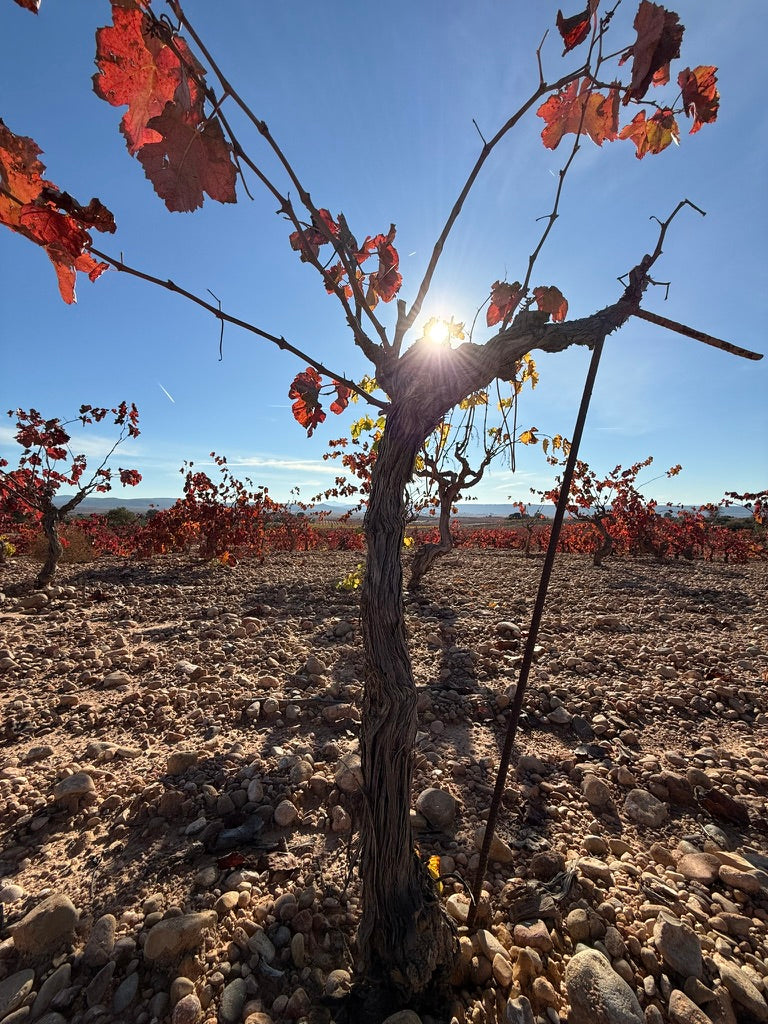
An old Bobal bush vine in late autumn near Casas de Eufemia.
Since the 1990s the area under Bobal has nearly halved. Spain's agriculture ministry encouraged growers to replace it with Cabernet Sauvignon, Merlot or Tempranillo, and later the demand for Cava cost more old vineyards. We think every old Bobal vine pulled out is one too many, because those vines hold exactly what makes the grape worth drinking today. How Bobal fits into the wider Spanish picture is in our guide to Spanish wines beyond Rioja.
Old vines, cool nights
Many of the vineyards sit at around 700 metres, on chalky clay and loam. Hot days are followed by cool nights, so the acidity holds and the wine stays fresh despite its power. The age of the vines does the rest. For our Bobal it is often right there on the product page: over 60 years for the Carrascal, 77 for Los Renteros, more than 100 for the Olivastro. For the Bobal by Diana García at Pago de Tharsys, the vines were planted in 1940.
Casas de Eufemia, one village, two styles
One place name keeps turning up in our Bobal range: Casas de Eufemia, a village near Requena. It is home to both Viña de Eufemia and Carres.
At Viña de Eufemia, winegrower Héctor Benavente works with oenologist Jean-François Hébrard. They farm by the principles of permaculture, with cover crops, herbs and shrubs between the vines instead of monoculture. Carres is a family estate founded by José Luis Torres Carpio, and every wine carries the name of the plot it comes from.
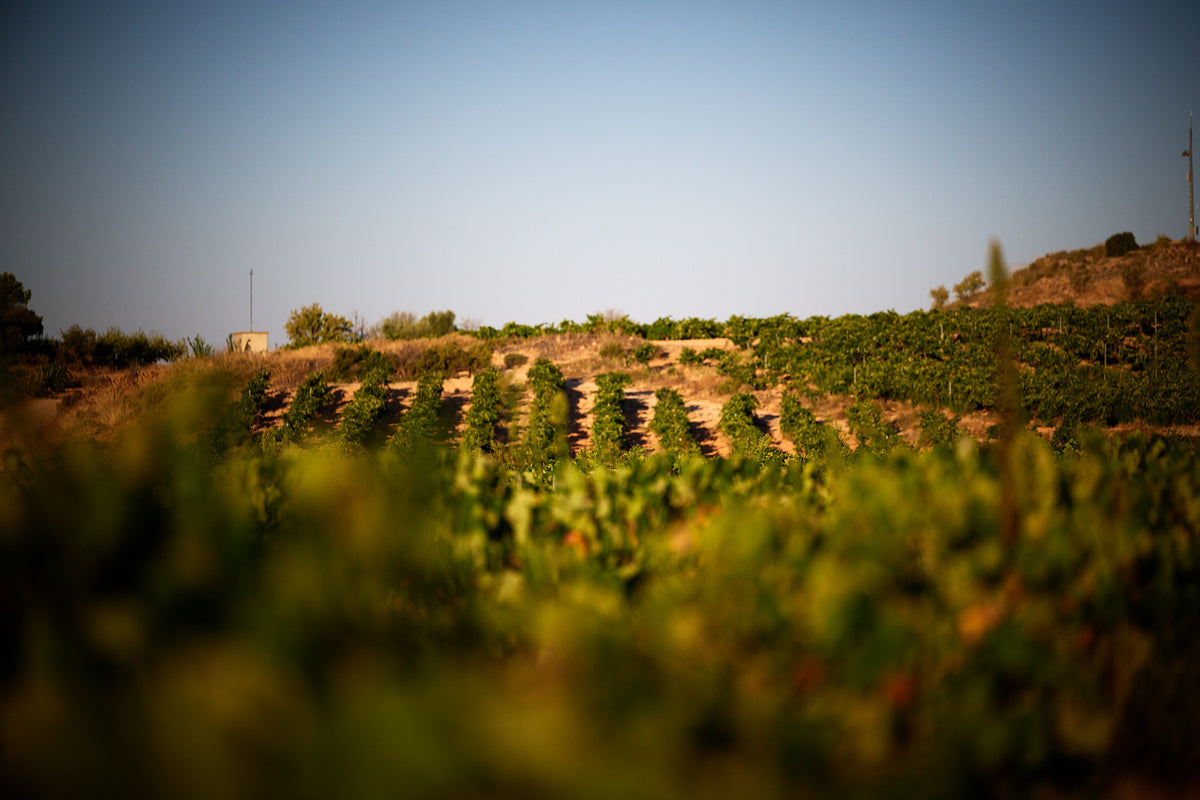
A Viña de Eufemia vineyard near Casas de Eufemia, late August.
Viña de Eufemia
Pure Bobal from vines over 60 years old, made as a rosé. The dark grape can also speak softly.
See CarrascalWhich Bobal for what
For an aperitif and warm days: the Carrascal Rosado de Bobal from Viña de Eufemia. Pure Bobal from an old vineyard near the village, four months on fine lees, 12.5 percent, only 1'600 bottles. Red berries, a hint of flowers, clean acidity. Have it with tapas or a light salad.
For every day, with rice dishes and the grill: the Noria Tinto de Eufemia. 80 percent Bobal from old vines, 20 percent Merlot, six months in wooden casks. Ripe red and dark fruit, soft tannins, fresh acidity. If you have never tasted Bobal, start here.
When you don't want to choose between red and white: Clara from Verónica Romero, a clarete of 60 percent Bobal and 40 percent Macabeo. Not a rosé but a blend of a red and a white grape, with no added sulphites. Cherry, green apple, citrus.
Light and saline, with fish and paella: Los Renteros, also from Verónica. Pure Bobal from 77-year-old bush vines, five months in clay amphora under a layer of flor, 12.5 percent, around 900 bottles. Pomegranate, dried herbs, and a fine salty freshness at the end.
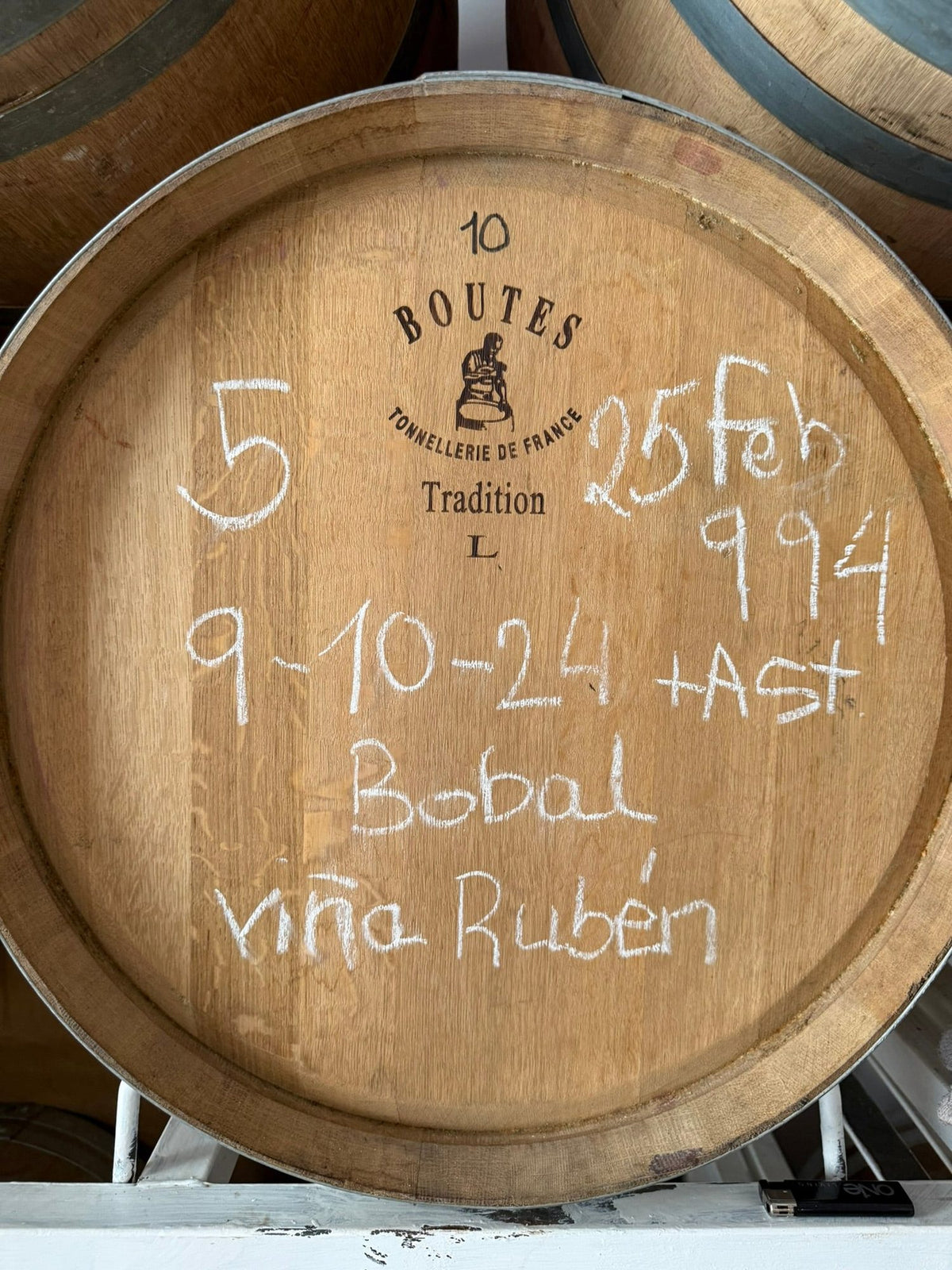
A barrel of Bobal «Viña Rubén» in Verónica Romero's cellar.
A lot of old vine for little money: Carlota Suria from Pago de Tharsys, Bobal from hundred-year-old vines, twelve months in French oak, 13 percent. Lavender, cherry, red plum. For more depth, the same house makes the Bobal by Diana García, 5'600 bottles of it.
For roasts, game and aged cheese: the Olivastro from Carres, pure Bobal from a single site of bush vines over a hundred years old, aged in used barriques. It will happily keep for a few more years. If you like oak, go for the Reserva Edición Limitada from Vera de Estenas: 17 months in new French oak, 90 points in the Guía Peñín.
Where to start
All Bobal-
Noria Tinto de Eufemia 2025, Viña de Eufemia
The way in. 80 percent Bobal from old vines.
CHF 23.00
-
Carrascal Rosado de Bobal 2025, Viña de Eufemia
Rosé from vines over 60 years old.
CHF 25.00
-
Los Renteros 2024, Verónica Romero
From the amphora, light and saline.
CHF 28.00
-
Olivastro 2022, Carres
Hundred-year-old bush vines. Will keep.
CHF 25.00


How to serve Bobal
Serve red Bobal at 16 to 18 degrees, as Pago de Tharsys recommends. The grape goes with grilled meat, rice dishes and aged Manchego. Its herbal side also handles roast vegetables, ratatouille or mushroom risotto. You will find all our wines from this grape under Bobal.
Our rule of thumb through the year: in summer the Carrascal Rosado, well chilled with tapas or a light salad; from October the Olivastro with roasts, game and aged hard cheese. If you have a cellar, put a second bottle of Olivastro away for a few years.
For more Spanish wine beyond Rioja, see our page Spanish wines.
