
Free shipping from 12 bottles · Delivery throughout Switzerland

Free shipping from 12 bottles · Delivery throughout Switzerland

Utiel-Requena · Spain
The best soils in Utiel-Requena lie around Casas de Eufemia. Héctor Benavente and his team let herbs and shrubs grow between the Bobal vines, because the vineyard is meant to be an ecosystem, not a monoculture.
1 Red wine, 1 White wine, 1 Rosé, 8 Sparkling wines, 1 Sweet wine. From CHF 19.00.
Xarello, Macabeo, Tardana
CHF 20.00
Bobal
CHF 25.00
Bobal, Merlot
CHF 23.00
Macabeo, Xarello
Sale price
CHF 24.90
Regular price
CHF 29.00
Grenache, Pinot Noir
CHF 23.00
Macabeo, Chardonnay
CHF 33.00
Chardonnay
CHF 35.00
Macabeo, Xarello
CHF 25.00
Pinot Noir
CHF 39.00
Pinot Noir
CHF 49.00
Macabeo
CHF 19.00
Tardana
Sold Out
No wine matches these filters.
Tasting boxes
Origin
Casas de Eufemia is a village about ten kilometres from Requena, inland from Valencia. The limestone soils around it are regarded as the best in the DO Utiel-Requena: poor, free-draining, with the vines at around 700 metres.
Viña de Eufemia started with five hectares of old vines and now works around 20. The oldest stocks are more than 80 years old. The first still wines were bottled from the 2025 vintage.
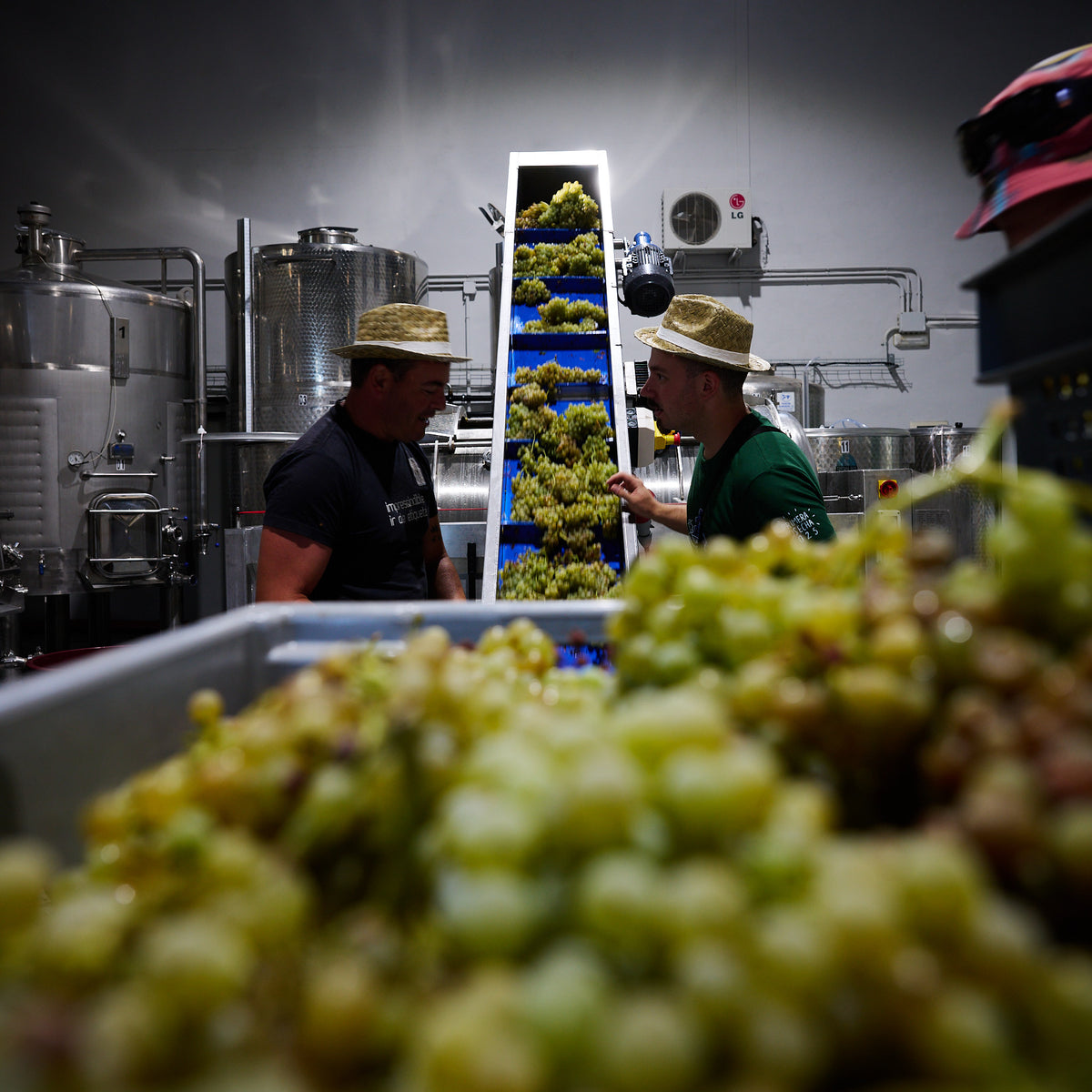

The people
The wines are made by Héctor Benavente, with the oenologist Jean-François Hébrard as consultant. Together with the founding team they set out to bring the old vineyards of Casas de Eufemia back to life through permaculture and regenerative farming, keeping the existing vines rather than replanting.
The focus is on the varieties that have long grown in Utiel-Requena: Bobal for red and rosé, and Macabeo, Xarel·lo and Tardana for the whites.
Philosophy
Herbs and shrubs grow between the Bobal vines in Casas de Eufemia.
The ground stays covered with plants, and the vineyard is run on permaculture principles. The vines of more than 80 years are looked after and kept, even though young vines would yield more.
From the cellar in Casas de Eufemia
Besides the still wines, Viña de Eufemia also makes sparkling wines, from Brut Nature to the Reserva Blanc de Noirs.
Macabeo
CHF 19.00
Macabeo, Xarello
Sale price
CHF 24.90
Regular price
CHF 29.00
Macabeo, Xarello
CHF 25.00
Pinot Noir
CHF 49.00
Terroir
Chalky sandy loam around Casas de Eufemia, poor and free-draining. The old vines root deep.
Bobal is the main red grape; the whites are Macabeo, Xarel·lo and the rare Tardana. Chardonnay, Pinot Noir and Garnacha go into the sparkling wines, and the Noria Tinto has 20 percent Merlot.
Continental, with a Mediterranean influence. Warm days, cool nights and the altitude of around 700 metres keep the acidity in the grapes.
In the cellar
Each plot is fermented separately in small batches, with native yeasts only, in stainless steel and ceramic. Nothing is fined or filtered. Wood is kept for a few single-vineyard wines, in large foudres and selected barriques.
The sparkling wines go through their second fermentation in bottle, most of them as Cava de Guarda Superior. Time on the lees runs from 12 months for El Pino Mariano to 80 months for the Reserva Blanc de Noirs 2017.
Tardana is a rare white grape from Utiel-Requena, and Eufemia turns it into two very different wines: dry in the Balsa Blanco, blended with Xarel·lo and Macabeo, and sweet in the Tardanamente Dulce, from late-picked grapes.
Our pick to start with is still the Carrascal Rosado, pure Bobal from vines over 60 years old. If you only know Bobal as a dark, powerful red, this rosé shows how fresh the grape can be.
Photos


Héctor Benavente, with oenologist Jean-François Hébrard as consultant. Together with the founding team, he is reviving old vineyards in Casas de Eufemia, in the DO Utiel-Requena inland from Valencia, through permaculture and regenerative farming. The chalky, well-drained soils around the village are said to be the best in the whole appellation, and that is where the bodega's plots lie.
The vineyard is meant to work as an ecosystem. Herbs and shrubs grow between the Bobal vines, and the ground stays green and alive. The cellar follows the same restraint: each plot is fermented separately in small batches, with native yeasts only, in stainless steel and ceramic. Nothing is filtered or fined. Wood is used sparingly, in large foudres and a few barriques for specific single-vineyard wines.
Bobal comes first, the red grape of Utiel-Requena. Alongside it are the white varieties Macabeo, Xarel·lo and the rare Tardana. For the sparkling wines the bodega also works with Chardonnay, Pinot Noir and Garnacha, and the Noria Tinto blends 80 percent Bobal with 20 percent Merlot. If you want to taste Bobal on its own, go for the Carrascal Rosado: 100 percent Bobal from vines more than 60 years old.
Start with the still wines, they show the bodega most directly. The Balsa Blanco, made from Xarel·lo, Tardana and Macabeo, is light and fresh, good with salads and fish. The Noria Tinto, Bobal and Merlot with six months in wood, suits tapas, rice dishes and anything off the grill. If you like bubbles, open the El Pino Mariano: pure Macabeo with no dosage, and the most affordable way into Eufemia's sparkling range.
Balsa Blanco, Carrascal Rosado and Noria Tinto cost between CHF 20 and 25, the sparkling wines between CHF 19 and 49.
Yes, and sparkling wine is actually the bigger part: most of the Eufemia wines in our shop have bubbles. All get their second fermentation in the bottle, most of them as Cava de Guarda Superior. Time on the lees runs from 12 months for El Pino Mariano and Carrasca Negra to 80 months for the Reserva Blanc de Noirs 2017, made from pure Pinot Noir.
For oysters or an aperitif, pick one of the two Brut Natures with no dosage, El Pino Mariano or Fuente Melada. With sushi, sashimi and tuna, try a rosé: the Carrasca Negra or the Reserva Rosé 2019. For lobster, scallops or a festive dinner, reach for the Reserva Brut Nature, pure Chardonnay partly aged in barrique, or the Reserva Blanc de Noirs 2017.
Yes, the Tardanamente Dulce, made from late-harvested Tardana, a rare white grape from Utiel-Requena. It is produced by cryoextraction, with no added sulphites. Only 198 half bottles (0.375 litres) exist of the 2025 vintage. Expect banana, lychee and honey on the nose. Drink it with dessert or cheese, or as the last glass of a long dinner.
Discover more


I am 18 or older
Your cart is currently empty.


