
Free shipping from 12 bottles · Delivery throughout Switzerland

Free shipping from 12 bottles · Delivery throughout Switzerland

Mallorca · Spain
Since 2018 Robert and Conny have run one of Mallorca's smallest wineries, among dry-stone walls near Felanitx. Only island varieties grow here, such as Callet, Manto Negro and Prensal Blanc.
2 Red wines, 2 White wines, 1 Rosé. From CHF 19.50.
Giró Ros
CHF 19.50
Callet
CHF 19.50
Prensal Blanc
CHF 19.50
Mantonegro
CHF 27.50
Mantonegro
CHF 23.50
No wine matches these filters.
Tasting boxes
Origin
Felanitx lies in the south-east of Mallorca. This is where the revival of Mallorcan wine began a few decades ago, among others with AN/2 from Ànima Negra. The Rosaberto vines grow right outside Conny and Robert's finca, on poor limestone between dry stone walls.
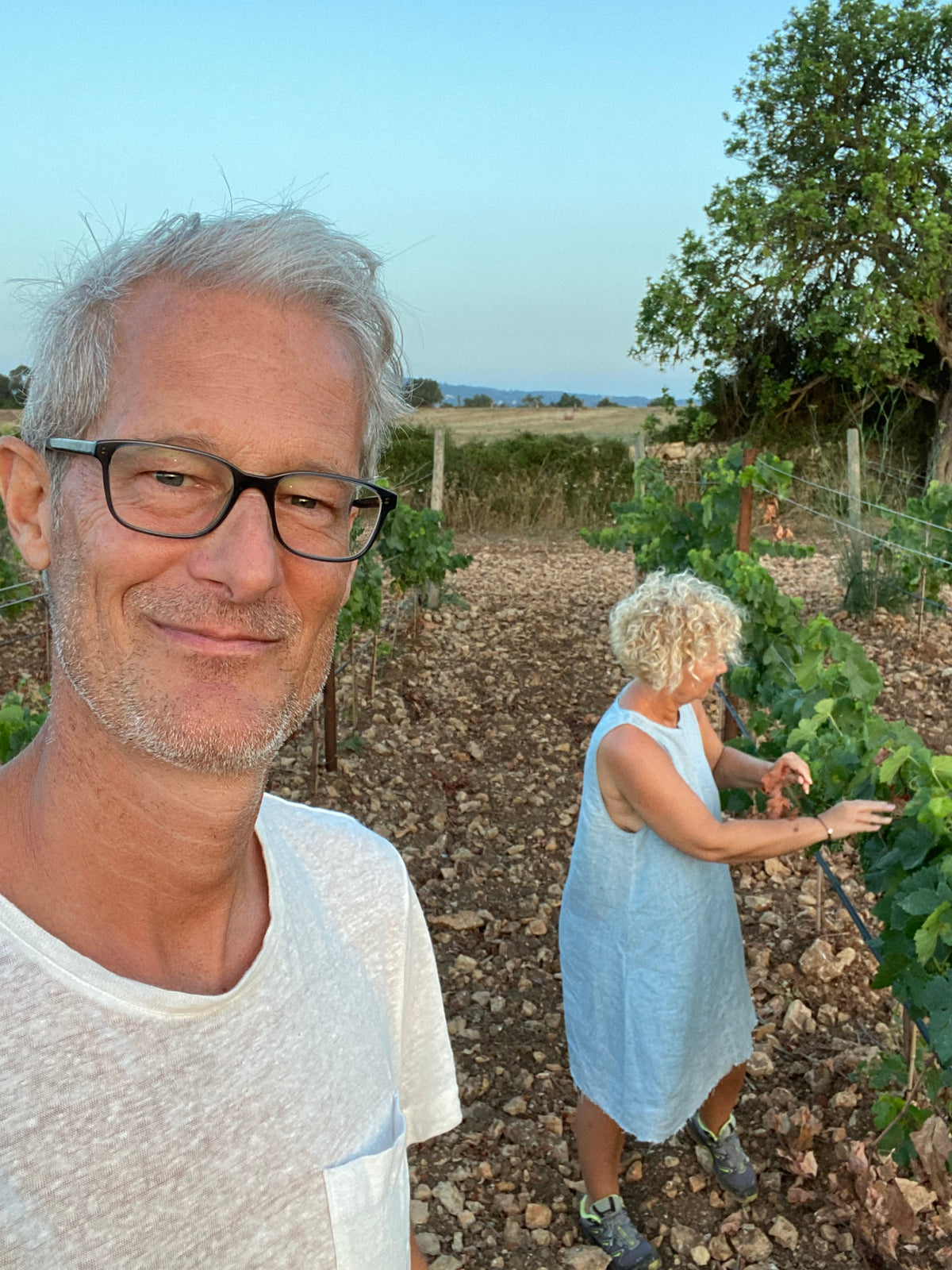

The people
Conny Koeninger and Robert Schumacher started Rosaberto in 2018. Vineyard and cellar are in the hands of Weinwert: the team led by winemaker Henri Fink planted the vines, tends them through the year, harvests, makes and bottles the wine. That is how Conny and Robert carry out their idea, from planting to bottle.
Philosophy
Only native Mallorcan varieties grow at Rosaberto.
The reds are Callet and Mantonegro, the whites Prensal Blanc, also called Moll on the island, and Giró Ros. They are adapted to the soil and the heat and build little sugar despite the warm climate: the whites and the rosat sit at 11.5 to 12.5 percent alcohol. No chemicals are used in the vineyard, and Conny and Robert look after the diversity of plants and animals.
Four island grapes
Prensal Blanc, Giró Ros, Callet and Mantonegro, each bottled on its own. Taste what Mallorca can do without international grapes.
Prensal Blanc
CHF 19.50
Giró Ros
CHF 19.50
Callet
CHF 19.50
Mantonegro
CHF 23.50
Terroir
Poor, pale limestone with some loam, stony and well drained, and red stony soil where the Mantonegro grows. The plots lie in the hills near Felanitx, divided by dry stone walls.
Four island varieties, each bottled on its own: Prensal Blanc, Giró Ros, Callet for the rosat and Mantonegro for the reds. Giró Ros and Negre Únic each come in only a few hundred bottles, exactly 318 of the Negre Únic 2023.
Mediterranean, with hot, dry summers and mild winters. The wind off the sea cools the vines.
In the cellar
Picking is by hand, and the Mantonegro is sorted twice. The white grapes and the Callet for the rosat go into the press as whole bunches. The juice ferments spontaneously in steel and stays briefly on its fine lees; none of these wines sees wood. Prensal Blanc and Giró Ros are neither fined nor filtered. The reds age in used French barriques, the Negre Únic for about nine months. The Mantonegro Coupage combines tank wine from 2024 with barrique wine from 2023.
Our tip to start with is the Rosat de Callet: pale copper, with cantaloupe, rhubarb and juniper, and at 11.5 percent light enough for an aperitif. If you prefer red, take the Negre Únic. The estate recommends serving it slightly chilled, with tapas or mature cheese.
Photos


Conny Koeninger and Robert Schumacher, since 2018. Their winery is near Felanitx in the south-east of Mallorca and is one of the smallest on the island. They put their idea into practice with oenologist Henri Fink and the Weinwert team, by hand from planting to bottling.
Only Mallorca's native varieties. The white ones are Prensal Blanc, also called Moll, and Giró Ros; the red ones Callet and Mantonegro. Every Rosaberto wine we stock is a single variety: the Prensal Blanc, the Blanc de Giró Ros, the Rosat made from Callet, and the Negre Únic and the Mantonegro Coupage, both from Mantonegro.
The vines grow near Felanitx, exactly where the revival of Mallorca's wine culture began a few decades ago. So for Conny and Robert it was clear they would plant the island's original varieties. They are adapted to soil and climate and do not build up too much sugar despite the heat. The white wines and the Rosat come in at 11.5 to 12.5 percent alcohol.
No chemical products are used in the vineyard, and Conny and Robert look after biodiversity. Picking is by hand. The whites and the Rosat are pressed gently as whole bunches, ferment spontaneously in steel and rest briefly on the fine lees, without wood. The Prensal Blanc and the Giró Ros are neither fined nor filtered. The reds age in used French barriques.
Both are pure Mantonegro. The Negre Únic 2023 spends about nine months in used barriques, has around 13 percent alcohol and tastes of red forest fruit and Mediterranean herbs, CHF 23.50. The Mantonegro Coupage combines tank wine from 2024 with barrique wine from 2023, has around 15 percent and shows plum, elderberry and clove, CHF 27.50.
The Prensal Blanc 2023 is pale and salty, with blossom, green apple and a little citrus. It suits a salad with goat's cheese, marinated fish or seafood. The Blanc de Giró Ros 2024 smells of ripe apricot and is almost creamy; try it with grilled vegetables or lemon risotto. There are only a few hundred bottles of the Giró Ros. Both cost CHF 19.50.
A rosé made from 100 percent Callet, a red island variety. The whole bunches are pressed gently, the juice ferments spontaneously in steel, and there is no wood. In the glass it is pale copper with orange glints; on the nose melon, rhubarb, juniper and a touch of honey. At 11.5 percent it is light. Drink it as an aperitif, with tapas or lobster salad, CHF 19.50.
Discover more

I am 18 or older
Your cart is currently empty.


