
Free shipping from 12 bottles · Delivery throughout Switzerland

Free shipping from 12 bottles · Delivery throughout Switzerland

Valais · Switzerland
Oscar Hauser and Thomas Carl farm one hectare in Savièse above Sion and leave hip-high grass standing between the vines. Their Fendant has 11.1% alcohol and is sulphured only once, at bottling.
2 Red wines, 1 White wine. From CHF 19.50.
Merlot
CHF 24.50
Pinot Noir
CHF 23.00
Chasselas
CHF 19.50
No wine matches these filters.
Origin
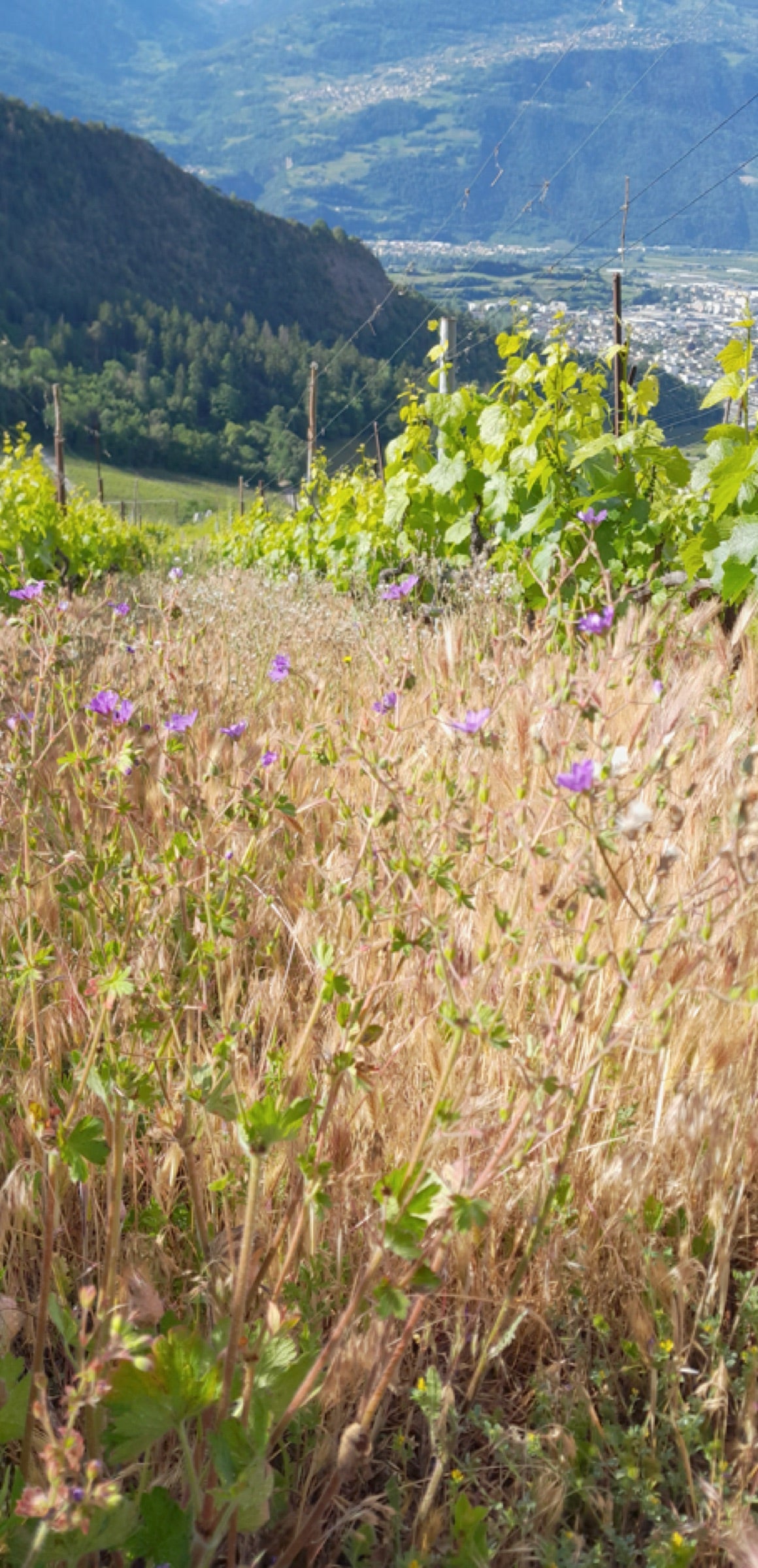
Savièse lies on the south-facing slope above the Rhône valley, up beyond Sion. Oscar and Tom's parcels climb the terraces. From below you see the town lying on the valley floor, from above the vines look across at the mountains on the other side. The cave has been going since 2024, the company behind it is Carl Hauser Sàrl, and the wines are AOC Valais.
Think wine in Valais and you think Fendant and Pinot Noir, and those are exactly what the two of them make, plus a Merlot.

The people
Oscar Hauser and Thomas Carl work one hectare of vines, and you can see it in the numbers. There are a good thousand bottles of the 2024 Fendant, and a hundred and fifty each of the Pinot Noir and the Merlot.
Philosophy
What strikes you first in the photos from their vines is what grows between the rows.
Hip-high grass stands there, with sainfoin and cranesbill, whatever comes up on its own. In that tangle, one picture has a green lizard sitting among old vine wood, another has a praying mantis climbing over a freshly picked bunch.
The bottle puts it in one sentence: «Respect de l'écosystème des vignes.»
Three wines from Savièse
All three ferment spontaneously and go into the bottle unfiltered, with sulphur added only once, at bottling. Every bottle carries its own painted picture, and on the back there is a little scene instead of a tasting note.
Chasselas
CHF 19.50
Pinot Noir
CHF 23.00
Merlot
CHF 24.50
Terroir
Site and soils. Savièse sits on the sunny side of the Rhône valley above Sion, and the parcels are steep and terraced. The upper part of the vines stands on slopes that have to be worked by hand, because no machine gets up there. Between the rows the cover crop stays, mown rather than turned over.
Currently in the range: Fendant, which is Chasselas under its Valais name, plus Pinot Noir and Merlot, all from 2024. Some of the stocks are old and gnarled, and in the photos from the white parcels you see trunks considerably older than the two winemakers. For 2025 an orange-fermented Fendant is coming, a Viognier, an orange blend of Pinot Gris, Johannisberg and Viognier, and a Syrah. The rest is in barrel.
Valais is the driest wine region in Switzerland, with plenty of sun, little rain, and cool nights coming down from the side valleys. Those nights are the reason a Fendant can stop at 11.1 percent here and still taste ripe: the acidity holds while the sugar does not run away.
In the cellar
All three wines ferment spontaneously, with the yeasts that sit on the grapes and in the cellar. The Fendant goes in as whole bunches in its own juice. Pinot Noir and Merlot spend three weeks on the skins, part whole bunches, part destemmed.
Then there is what does not happen: no oenological additives, no filtration, and sulphur goes in once, at bottling. Total sulphites are below 30 mg per litre in the Fendant and below 25 in the two reds. That is a fraction of what would be permitted.
In the Fendant the result is 11.1 percent alcohol.
Every bottle carries its own painted picture. On the Fendant, yellow birds fly over blue and pink fields, on one of the reds a beetle sits on a pastel ground, on the next a red figure stands in yellow light. Hence the name: Kaléidoscope, a different pattern with every turn.
On the back, instead of a tasting note, there is a small scene. On the Fendant this one: «After a hard day in cold and wind, your survival instinct leads you to the fridge.»
Photos


Every bottle from Cave Kaléidoscope in Savièse carries its own painted picture. On the Fendant, yellow birds fly over blue and pink fields; on one of the reds, a beetle sits on a pastel ground. Hence the name: Kaléidoscope, a different pattern with every turn. On the back there is a scene instead of a tasting note, for the Fendant the walk to the fridge after a hard day in cold and wind.
In Savièse, on the south-facing slope above the Rhône valley, up beyond Sion. Oscar Hauser and Thomas Carl farm one hectare of vines there on steep terraces. The cave has existed since 2024, the company behind it is Carl Hauser Sàrl, and the wines are AOC Valais.
Fendant is the Valais name for Chasselas, the classic white grape of French-speaking Switzerland. It is usually made light and unobtrusive. With Oscar and Tom it ferments spontaneously as whole bunches in its own juice and stays unfiltered. That gives the wine more texture than the variety is usually credited with, at just 11.1 percent alcohol. In our shop the Fendant 2024 costs CHF 19.50.
In the cellar, Oscar and Tom work like many natural-wine makers: spontaneous fermentation, no oenological additives, no filtration, and sulphur added only once, at bottling. In the vineyard they still use conventional treatments, and the estate is converting to organic. That is why we do not call these wines natural wines.
In the Fendant, total sulphites are below 30 milligrams per litre, in the Pinot Noir and the Merlot below 25. Sulphur is added only once, at bottling. The legal limit is several times higher, and most wines sold as natural wine are above these levels too.
Both are made the same way: spontaneously fermented, three weeks on the skins, partly as whole bunches, partly destemmed, unfiltered. The Pinot Noir has 13 percent alcohol and is fruity and spicy, lively yet soft, a wine for loud dinner tables. The Merlot has 12.6 percent, lots of aroma and spice, is round and held together at the end by a line of tannin. The Pinot Noir costs CHF 23, the Merlot CHF 24.50.
They let the soil live. Between the rows, hip-high grass grows with sainfoin and cranesbill, mown rather than ploughed in. The plots are steep and terraced, and no machine gets up to the top part, so it is worked by hand. Some of the vines are old and gnarled. The bottle sums up the approach in one sentence: «Respect de l'écosystème des vignes.»
Discover more

I am 18 or older
Your cart is currently empty.


