
Free shipping from 12 bottles · Delivery throughout Switzerland

Free shipping from 12 bottles · Delivery throughout Switzerland

Ribeira Sacra · Spain
Guímaro is Galician for rebel, and it was what people called Pedro Rodríguez's grandfather. Pedro farms eight hectares on the steep slopes of the Ribeira Sacra and has brought the growers who supply him with grapes round to more sustainable viticulture.
7 Red wines, 1 White wine. From CHF 18.00.
Mencía
CHF 18.00
Mencía, Brancellao, Sousón, Caiño, Grenache, Mouratón, Merenzao
CHF 29.00
Mencía, Caiño, Merenzao, Sousón, Mouratón, Garnacha Tintorera
CHF 48.00
Mencía, Brancellao, Sousón, Caiño, Grenache
CHF 45.00
Mencía, Sousón, Brancellao, Garnacha Tintorera, Caiño
CHF 32.00
Mencía, Sousón, Merenzao, Brancellao, Grenache, Mouratón, Negreda
CHF 25.00
Mencía, Sousón, Merenzao, Garnacha Tintorera, Brancellao
CHF 25.00
Godello, Treixadura, Albariño, Torrontés, Loureira
CHF 18.00
No wine matches these filters.
Tasting boxes
Origin
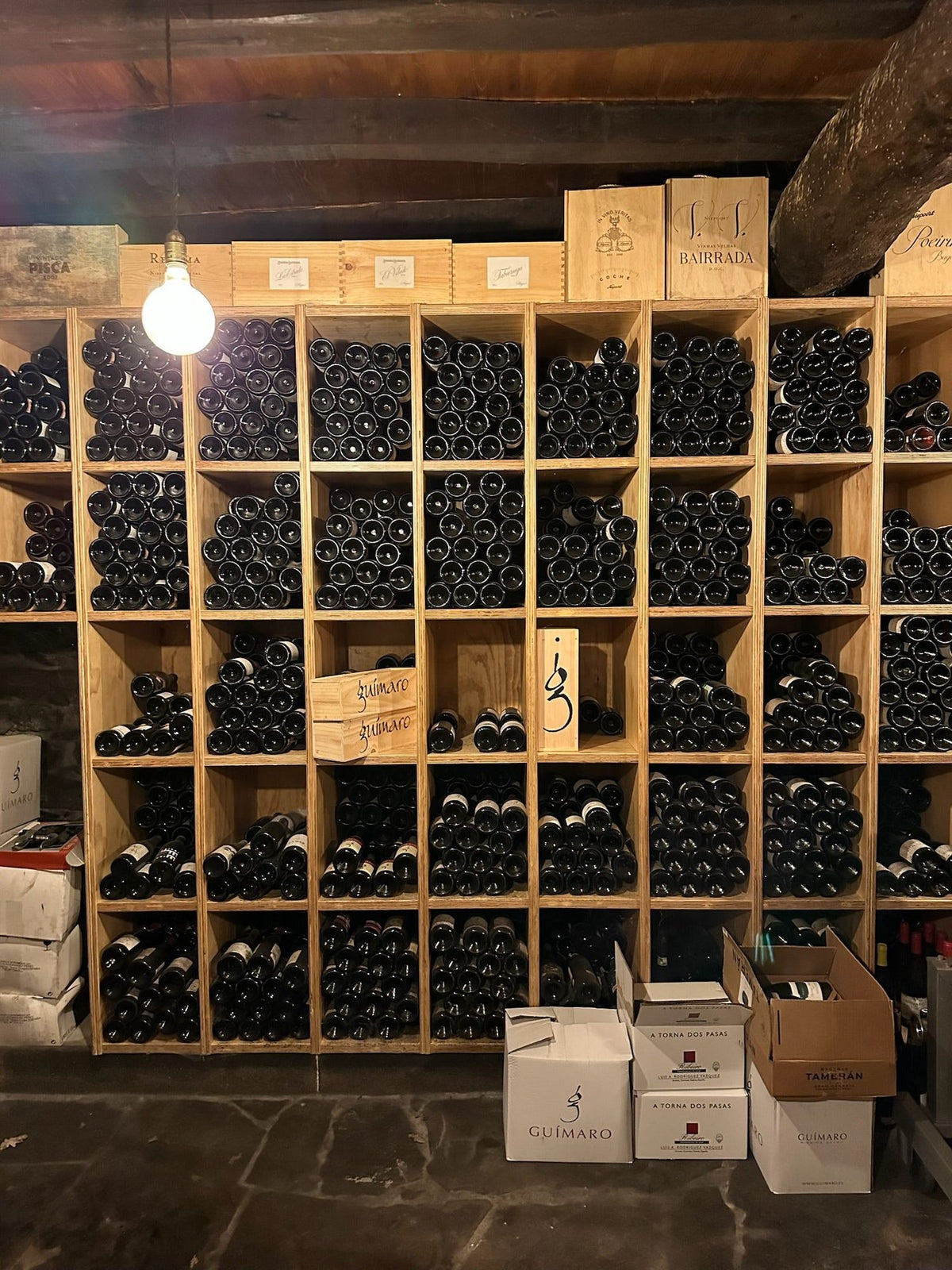
Sober lies in the Ribeira Sacra, in the Amandi sub-zone, on the slopes between the Sil and Miño rivers. The Guímaro plots are not far apart, yet they give very different wines. By the Sil the vines grow on slate with iron and quartz, by the Miño on deep granite. You taste it most clearly in two wines that are otherwise made almost the same way: San Pedro from the Sil and Mundín from the Miño, both 80 percent Mencía and 18 months in large casks.

The people
Guímaro means rebel in Galician; it was the nickname of Pedro's grandfather. For generations the Rodríguez family sold their wine in bulk, in 20 litre glass demijohns, to bars in the area. In 1991 Pedro's parents Manolo and Carmen enlarged the cellar in Sober and started bottling, and in 1996 Guímaro joined the D.O. Ribeira Sacra. Pedro Manuel Rodríguez took over in 2001, when Guímaro still made mainly young reds. In 2002 he began working with Raúl Pérez from Bierzo. Wild yeasts, whole bunches and large casks came into the cellar with him, and single plots became single-vineyard wines.
Philosophy
Pedro farms eight hectares of his own vines and buys grapes from neighbours.
Over the years he has brought these growers round to more sustainable farming. The grapes for his Mencía 2023 come from vines averaging 40 years old in several plots, which he ferments separately by soil type and only blends afterwards.
Mencía in four steps
The Mencía 2023 comes from steel tanks, the three single-vineyard wines ferment in wooden vats, partly with whole bunches. James Suckling named the Meixemán the best wine in Spain in 2024.
Mencía
CHF 18.00
Mencía, Brancellao, Sousón, Caiño, Grenache, Mouratón, Merenzao
CHF 29.00
Mencía, Brancellao, Sousón, Caiño, Grenache
CHF 45.00
Mencía, Caiño, Merenzao, Sousón, Mouratón, Garnacha Tintorera
CHF 48.00
Terroir
Slate, granite and sand, often within a short distance. By the Sil, slate with iron and quartz; by the Miño, deep granite. Pombeiras faces south on slate, Capeliños south-west on granite and slate.
For red mostly Mencía, with the old local varieties Brancellao, Sousón, Caiño, Merenzao, Mouratón and Garnacha Tintorera. For white mostly Godello, blended in the Blanco with Treixadura, Albariño, Torrontés and Loureira. The vines for Capeliños are almost 100 years old, those for Meixemán over 70.
Atlantic with a continental influence. Summers are warm without extreme peaks, nights are cool and the grapes ripen slowly.
In the cellar
Everything ferments with the yeasts from the vineyard. For the single-vineyard wines, whole bunches with stems go into open wooden vats, 65 percent for Meixemán and all of them for Pombeiras, and the must stays on the skins for about 50 days. The grapes for Capeliños are trodden by foot. Ageing happens in barriques, in 500 litre barrels and in 3,000 litre casks. Only the Mencía 2023 spends six months in steel.
In 2024 James Suckling named the Finca Meixemán 2022 the best wine in Spain. It comes from one of the family's oldest vineyards, 80 percent Mencía from vines over 70 years old, around 20,000 bottles. If Guímaro is new to you, start with the Mencía from the steel tank anyway, it shows the grape without oak. Open the Meixemán after that, an hour before dinner.
Photos


Guímaro is Galician for rebel. It was the nickname of the grandfather of Pedro Manuel Rodríguez, who runs the estate in Sober today, and the nickname became the name of the adega.
Pedro Manuel Rodríguez, from a family with a long winegrowing tradition in Sober, in the Amandi subzone of the Ribeira Sacra. The family modernised its cellar in 1991 and joined the D.O. Ribeira Sacra in 1996, and Pedro took over in 2001.
In 2024 James Suckling named the Meixemán the best wine in Spain. The grapes come from the family vineyard Meixemán, one of the oldest plots, with vines over 70 years old. The wine is 80 percent Mencía and 20 percent other native varieties such as Sousón, Caiño and Merenzao. 65 percent of the grapes ferment as whole bunches in wooden vats. With us it costs CHF 29.
Pedro has worked with winemaker Raúl Pérez since 2002. When Pedro took over in 2001, Guímaro mostly made young reds. The partnership brought new techniques and single-vineyard wines such as Finca Meixemán, Finca Capeliños and Finca Pombeiras.
For reds, mainly Mencía, joined by old local varieties: Brancellao, Sousón, Caiño, Merenzao, Mouratón and Garnacha Tintorera. The Mencía 2023 is a single variety, while in the other reds Mencía leads, usually at 70 to 85 percent. The Blanco is 70 percent Godello, with Treixadura, Albariño, Torrontés and Loureira.
The Mencía 2023 for CHF 18: pure Mencía from vines around 40 years old on average, six months in steel, 12.5 percent alcohol. Served at 14 to 16 °C, it suits tapas, pasta and lighter meat dishes. For white, there is the Blanco 2023, also CHF 18, fresh with citrus and wild herbs, good with seafood and fish.
Mencía and Blanco cost CHF 18, Mundín and San Pedro CHF 25, the Meixemán CHF 29, A Ponte CHF 32, and the single vineyards Capeliños and Pombeiras CHF 45 and 48.
The river. San Pedro comes from plots along the Sil, on slate with iron and quartz. Mundín comes from deep granite soils by the Miño. Both are 80 percent Mencía from vines over 60 years old and age for 18 months in large 3,000-litre casks. San Pedro is the fuller of the two, Mundín the silkier, with an earthy finish. Both cost CHF 25.
Two of Guímaro's single vineyards, each made in about 10,000 bottles. Capeliños comes from vines almost 100 years old on granite and slate, facing south-west. The grapes are trodden by foot, and the wine ages 12 to 14 months in barriques. Pombeiras faces south on slate, ferments with whole bunches and ages eight to ten months in 500-litre barrels. Both suit game and grilled meat.
Discover more


I am 18 or older
Your cart is currently empty.


