
Free shipping from 12 bottles · Delivery throughout Switzerland

Free shipping from 12 bottles · Delivery throughout Switzerland

Bandol · Côtes de Provence · France
Audrey, Léonie and Justine Arlon have been making wine in a pink-painted house in Les Lauves since 2013. Their parents used to sell the harvest to the cooperative, until Audrey suggested a domaine of their own.
2 Rosés. From CHF 15.50.
Mourvèdre, Grenache, Cinsault
CHF 20.00
Mourvèdre, Carignan, Grenache, Cinsault
CHF 15.50
No wine matches these filters.
Origin
Les Lauves belongs to the commune of La Cadière-d'Azur in the Var. The Arlon family's nine hectares lie here, almost all of them in the Bandol appellation, on a slope above the Mediterranean looking over the bay of Les Lecques near Saint-Cyr. Garrigue and hundred-year-old olive trees surround the vines. The house is painted pink and hard to miss from the road.

The winemakers
For years, Madame and Monsieur Arlon grew vines and delivered the grapes to the cooperative. Audrey, the eldest daughter, studied agriculture, worked for three years in Chile and Bordeaux and became cellar master at an estate in Bandol. Her suggestion to make the wine themselves led to their first own vintage in 2013. Léonie, who had specialised in food, joined a year later, while Justine was still studying. In the logo, a flower replaces the dot on the i of “Filles”.
Philosophy
“Our vines are like our daughters: we give them love and they give it back”, the family says.
In the vineyard that means working the soil, removing shoots, hoeing and thinning by hand, and integrated pest management (lutte raisonnée). 85 per cent of the Bandol vines are bush-trained. The grapes are picked early in the morning into small crates.
One cellar, two appellations
Both rosés are pressed straight away, fermented cool and aged in concrete tanks. In the Bandol, Mourvèdre sets the tone; in the Côtes de Provence it is Grenache, with a hint of grapefruit. Two wines for two occasions, both from the pink house.
Mourvèdre, Grenache, Cinsault
CHF 20.00
Mourvèdre, Carignan, Grenache, Cinsault
CHF 15.50
Terroir
Clay and limestone soils (argilo-calcaire) on slopes. The name Les Lauves comes from the large limestone slabs that break through the ground here.
Mourvèdre, Grenache, Cinsault and Carignan. The Bandol rosé has 60 % Mourvèdre, the Côtes de Provence 60 % Grenache and only 5 % Mourvèdre.
Mediterranean climate on a slope above the sea. According to the family, the site keeps fog, frost and the mistral away from the vines.
In the cellar
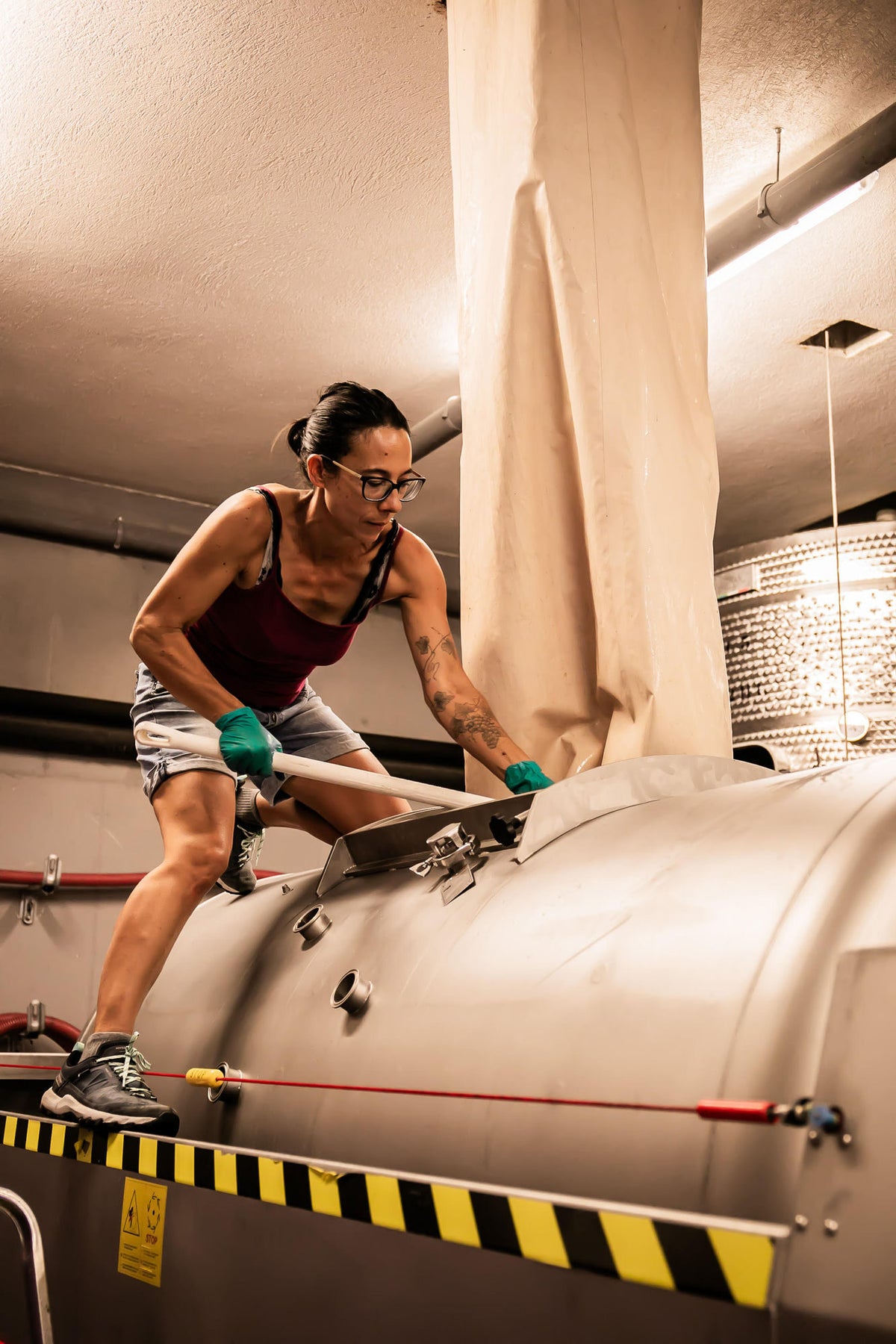
The cellar is built into the hillside, into the rock of the vineyard. The grapes fall into the press by gravity, without a pump, and the cellar stays at 14 to 16 degrees all year. Both rosés are pressed directly, fermented cool and aged in concrete tanks. The surfaces in the cellar are lacquered in plum red and pink.
The Arlons make a Bandol rosé and a Côtes de Provence, plus a red Bandol with 75 % Mourvèdre aged 18 months in barrel, and country wines from Mont Caume. We carry the two rosés. The Bandol yields 35 hectolitres per hectare and belongs with a meal, the Côtes de Provence yields 45 and is our apéritif rosé. In May 2019 it was wine of the month in Millésime, the magazine of Bandol Vins & Comestibles.
Photos


By the pink house in Les Lauves, a hamlet of La Cadière-d'Azur. In 2013 it was painted pink and named «Trois Filles». Inside the cellar, too, the surfaces are lacquered plum red and pink, and in the logo the dot on the i of «Filles» becomes a flower.
The three sisters Audrey, Léonie and Justine Arlon. They made their first own vintage in 2013; before that, their parents sold the grapes to the cooperative. The family's nine hectares lie in Les Lauves on a slope looking out over the Mediterranean. The hamlet is named after the large limestone slabs that jut out of the landscape there.
Audrey, the eldest, studied agriculture, worked in Chile and Bordeaux and became cellar master at an estate in Bandol. She suggested to her parents that they make their own wine. The first own vintage came in 2013, and Léonie joined a year later.
60 percent Mourvèdre, 25 percent Grenache and 15 percent Cinsault. As it should be in Bandol, Mourvèdre leads. The grapes come from hillside plots inside the AOP Bandol, on clay and limestone soils that store water well and release warmth slowly. Mourvèdre gives the wine depth and length, while Grenache and Cinsault bring freshness.
Both are made in the same cellar, both are pressed straight away, fermented cool and aged in concrete tanks. The difference is the blend: the Bandol has 60 percent Mourvèdre, the Côtes de Provence 60 percent Grenache, plus Cinsault, Carignan and 5 percent Mourvèdre. The Côtes de Provence is fruity, with grapefruit, and your rosé for aperitif time. The Bandol has more length and can carry a whole meal.
The vineyard is worked by hand, from removing shoots to picking. Harvest happens early in the morning, by hand and into small crates, so the berries do not suffer a temperature shock. The Arlons built their cellar straight into the rock of the slope. It stays at a constant 14 to 16 degrees, and gravity brings the grapes down into the press.
Pale pink in the glass, exotic fruit, peach and citrus on the nose, creamy and long on the palate. Audrey recommends it with scallop risotto. It also works with grilled fish, seafood, paella or white meat, and it makes a good aperitif too. Serve it at 12 to 14 degrees.
The slope in Les Lauves lies above the bay of Les Lecques, and the nearby sea softens the heat. According to the family, the site shelters the vines from fog, frost and the mistral.
The Côtes de Provence rosé costs CHF 15.50 and the Bandol rosé CHF 20, both from the 2025 vintage.
Discover more

I am 18 or older
Your cart is currently empty.


